Custom Shirts, Screen PrintingAugust 31, 2017
Why Do Polyblend Fabrics Feel Softer Than Cotton?
Cotton and polyester fibers under a microscope, and why blended shirts feel softer
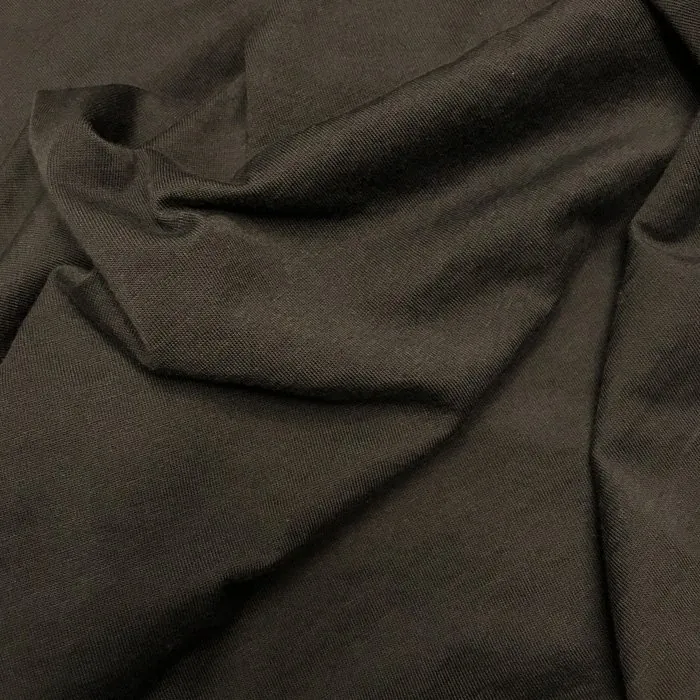
The softest ink you can put on a T-shirt is water-based ink. The best fabrics to showcase its softness are tri-blend and poly-cotton blend shirts, because they’re the softest. With all the hype around 100% cotton shirts, it’s easy to overlook these higher-end fabrics. Why are they the softest kind of T-shirts available? Let me give you some science by looking at each under magnification.
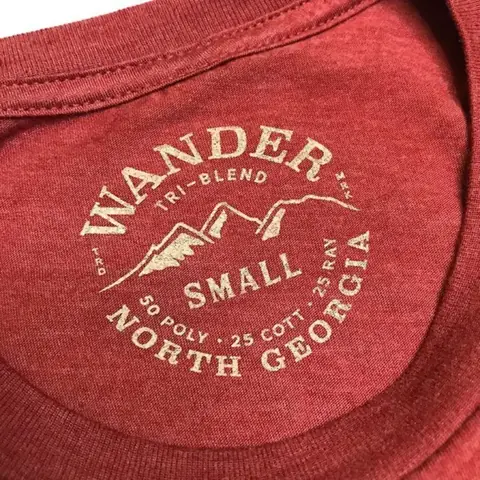
First, some good examples of these shirts are Bella+Canvas’s Unisex Triblend Short Sleeve Tee (3413), one of the ten shirts our clients order most, and their Unisex Poly-Cotton Short Sleeve Tee (3650).
Blended fabrics have a softer hand than 100% cotton because synthetic fibers are smoother and more pliant than natural cotton fibers. Because of this, the surface they create in a weave is more uniform. Synthetic blends drape more closely to the body, giving them a luxurious feel.
If you look at the individual fibers of these fabrics under a microscope, the reason for their behavior becomes apparent.
Cotton Fibers
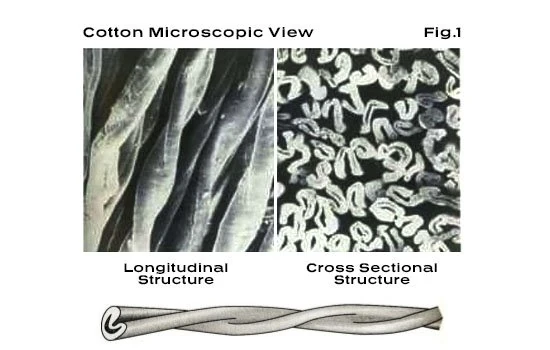
Cotton fibers are natural, and each one is a single elongated plant cell. They are flat and twisted like a ribbon, and they form a hollow, kidney-shaped cross-section. Imagine super tiny cinnamon sticks and you’ll have the right idea. This structure gives cotton fabrics an open, slightly puffy, and semi-rough texture, which is why cotton feels less soft than synthetic fabrics.
Because of the organic, non-uniform structure of the fibers, there are lots of open spaces between them. This is why cotton is one of the most breathable fabrics you can wear. That breathability lets heat leave your body easily, which makes 100% cotton a popular choice for hot environments, along with fabrics like linen.
When water comes in contact with cotton, it fills the inside fold of its ribbon structure and stays there. This is why cotton is such an absorbent material and can feel heavy with perspiration. As soon as you start to sweat, that breathability goes away.
Cotton moves air well, but not moisture.
Polyester Fibers
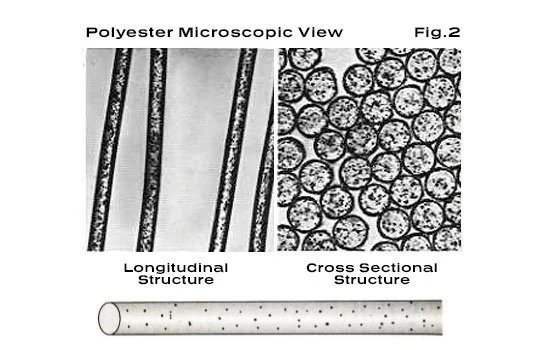
Polyester fibers, on the other hand, are synthetic, smooth, solid, and straight. They have a round cross-section and are narrower than cotton fibers.
This structure gives polyester fabrics a slick, smooth texture. Since the fibers have a uniform shape, there’s less texture touching your skin and they have a superior drape. These properties give the fabric an overall softer feel.
The uniform design has a tighter structure and easily passes moisture. It carries sweat away from the skin to the outer surface of the garment, where it can evaporate. This is why many wicking performance fabrics, like rash guards, are made of either 100% polyester or a poly-nylon blend. However, this same fiber structure does not pass air well.
Polyester moves moisture well, but not air.
Blends: The Best of Both
Tri-blends, which are a mix of cotton, polyester, and rayon, are the manufacturers’ attempt at giving you the best of both worlds: the breathability of cotton combined with the soft, pliable structure of synthetics.
When it comes to comfort, moving moisture away from your skin is a higher priority than moving air. If you know you’re going to sweat, or if you just really like soft fabrics like we do, go with a blend.
If you have any blended T-shirts in your closet, you’ll probably find yourself choosing them over your other shirts again and again, because of how fantastically soft and easy they feel on your skin.
Good to Know
Short answers from our customer FAQ:
- What are heather and tri-blend shirts?
- What fabric blends work best for screen printing?
- Which ink is softest?
- What is discharge ink? It needs mostly cotton, so it doesn’t work on blends.

J.Gilman
Co-founder of Danger Press in 2004. J’s background is in corporate identity design, photography, calligraphy, illustration and marketing. He enjoys solving problems, negative space, brevity, black cats, and the color gray.